Conlin + Howard Publishers

Welcome to CONLIN + HOWARD PUBLISHERS. Our goal is to offer low-cost, high quality e-books.

Purchase More Cash is Better than Less Cash at
Amazon for $3.99 or read for free at Amazon Unlimited.
You just enrolled in your company’s 401(k) or set up an IRA (individual retirement account). You may be considering investing in one or more mutual funds. The big question is how do you choose? There are approximately 8000 mutual funds available. A 401(k) will likely include a couple dozen.
The typical advice is to look for funds with low costs. You actually get this information in tiny fractions called expense ratios. Fund return ratios may be more important but are less often cited as a concern. Nevertheless, it is up to you to figure out what the small numbers mean. You may also be advised to consider issues like how often funds’ portfolios and managers change. Oh, and don’t forget to read the prospectus, written in language so dense and obscure only an investment banker or securities lawyer could love it.
So, where do you start?
Let’s look at an excerpt of investment choices from a real 401(k). Notice, the ratios are very small numbers — not dollars and cents.

Now pick one!
Difficult to say the least.
If you could convert this information to dollars, investments would be much easier to evaluate. That is what we will show you how to do in detail.
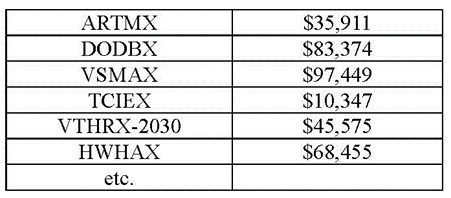
VSMAX clearly earned the most income.
The value of funds and individual stocks and bonds on which they are based change constantly – literally from second to second. Furthermore, all investment data is backward looking, because no one, including fund managers, advisors, or the authors of this manual, have a crystal ball to see into the future. The SEC makes these facts absolutely clear. That is why the SEC requires funds clearly to state that past performance does not necessarily predict future results.
More Cash is Better Than Less shows you how to monetize historical return and expense ratios to make a systematic assessment of mutual funds’ past profitability.
Contact Us
Your message has been sent
